Michaelangelo Buonaroti, hailed as one of the most masterful artists in history, enjoyed much fame during his life. He was given the distinction of being the first artist to have his biography published during his lifetime. He was referred to, in Florence and around Italy, as Il Divino, or "The Divine One." Once he entered the forefront of the Renaissance art society, his fame spread, and throughout his life he received commission upon commission by the most respected patrons in Italy.
Although reported to be somewhat arrogant regarding his talents, his own words provide a deep insight.
"If people knew how hard I worked to gain my mastery, it would not be so wonderful."
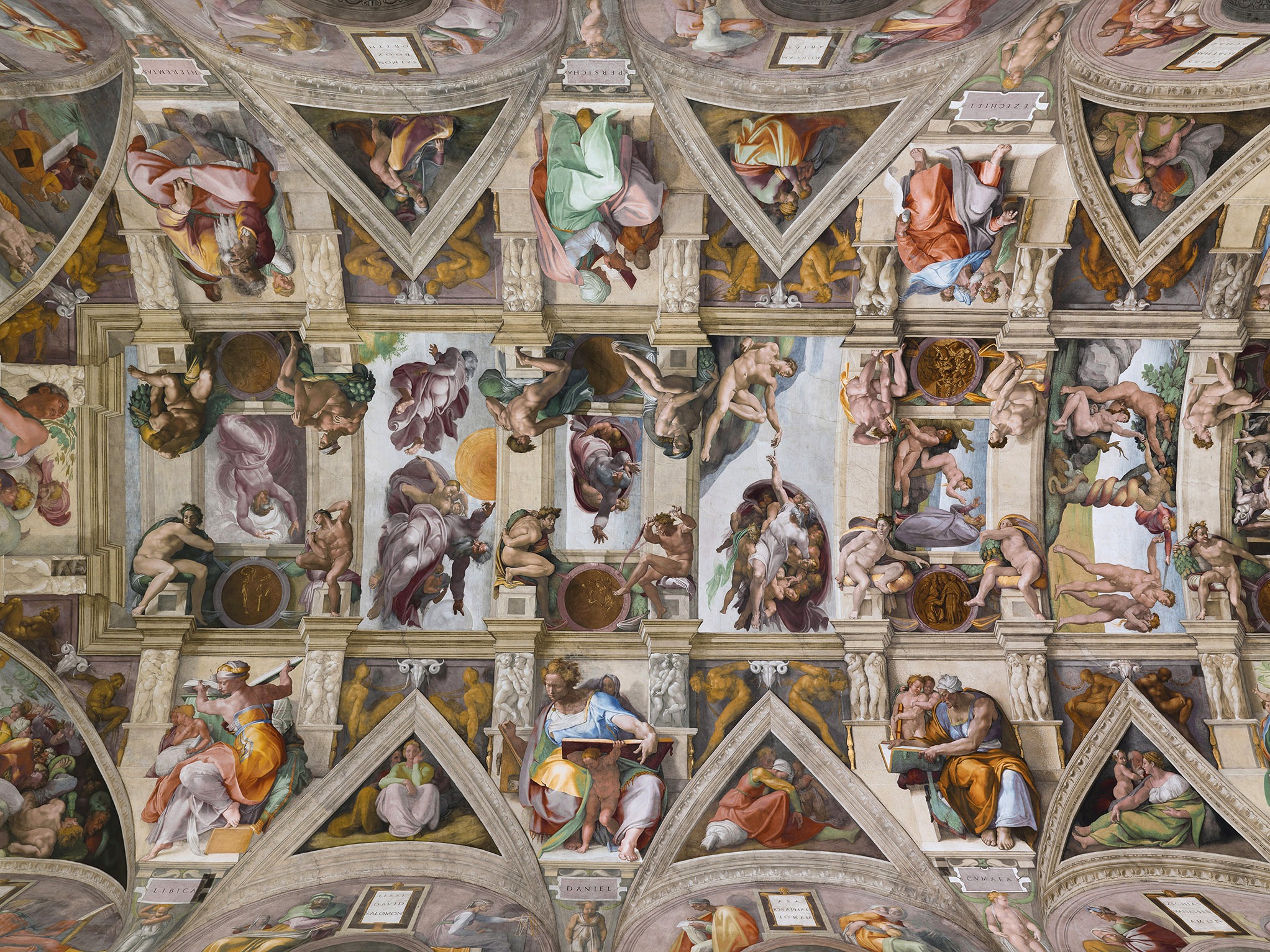
Ceiling of the Sistine Chapel, painted by Michaelangelo
Hesiod (c. 700 BC)
The early Greek poet and author, Hesiod, a contemporary of Homer, believed as well in diligence.
"Mediocrity is easy, it can be had in quantity. The road is smooth, safe, and it lies close by. But, in front of excellence the immortal gods have put sweat and hard work and long and steep is the road to it, and rough at first. But, when you make it to the top then it is easy, even though it is hard."
Several months ago, I went to a meeting where I was privileged to hear a man named Elder Kevin W. Pearson speak to a group of missionaries. He is a member of the First Quorum of the Seventy, of the Church of Jesus Christ of Latter-day Saints. He is a special witness of Jesus Christ. He said something that struck me and which I want to apply.
"Hard work reveals capacity....The harder I work, the more my innate capacity is revealed to me."
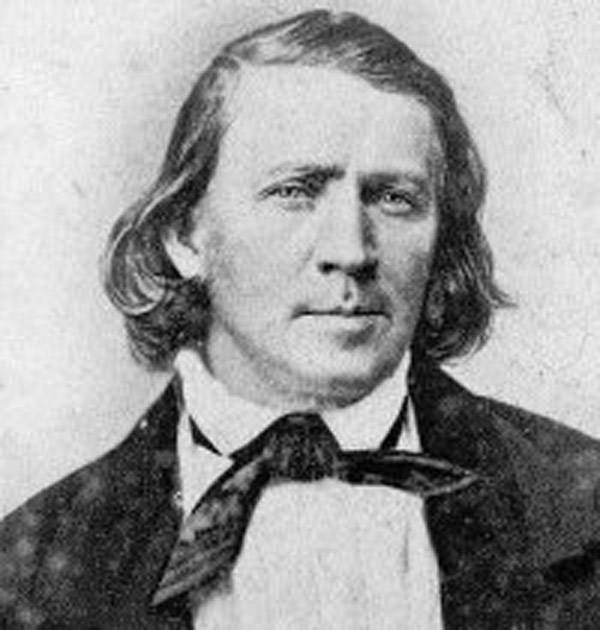
Another special witness of the Savior, David O. McKay, who passed away in 1970, had a similar energy by which he did great things and inspired others to rise higher.
"You are the one who has to decide whether you'll do it or toss it aside; whether you'll strive for the goal that's afar, or just be content to stay where you are."
This life is a time to work and to work hard. God will not justify anyone who refuses to measure up to his own potential. We mortals are weak but we can give what we have, and when we do so, God can do great things through us.
God doesn't want us to be average. He wants us to be heirs of Eternal Life. He wants us to be outstanding. To obtain that type of excellence requires, as Michaelangelo said, hard, concerted, focused, and prolonged labor.
Our potential of our Divine spark is limitless when we strike the flint of our own diligent effort to the steel of God's grace. It will light a fuse that can only be cut by our own doubt.
In others' words,
"Doubt not, but be believing, and begin as in times of old, and come unto the Lord with all your heart, and work out your salvation with fear and trembling before him."
"You are a child of God. He is the Father of your Spirit. Spiritually you are of noble birth, the offspring of the King of Heaven. Fix that truth in your mind and hold to it. However many generations in your mortal ancestry, no matter what race or people you represent, the pedigree of your spirit can be written on a single line. You are a child of God!"
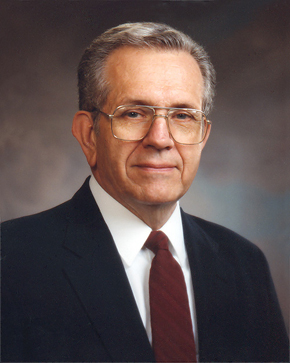
-Boyd K. Packer
(1924-Present)
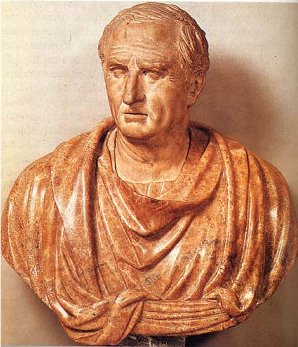
Cicero taught, "Control Thyself."
(106-43 BC)
"Learn to control yourselves; learn to be in the hands of God as clay in the hands of the potter."
"I have frequently said that the greatest endowment God ever gave to man is good, sound, solid sense to know how to govern ourselves."
"If you first gain power to check your words, you will then begin to have power to check your judgment, and at length actually gain power to check your thoughts and reflections."
"To find real happiness, we must seek for it in a focus outside ourselves. No one has learned the meaning of living until he has surrendered his ego to the service of his fellow man. Service to others is akin to duty--the fulfillment of which brings true joy." -Thomas S. Monson
(1927-Present)
I apologize for the last post. I'm simplifying. I will return to the real purpose of this blog and minimize my own commentary (soap-boxing) on the quotes I provide. I can't really say it any better anyway.
I am reprimanded by the words of a favorite author of mine, Antoine de Saint-Exupéry. In his book The Little Prince, the title character so truly teaches (as I have now illustrated):
"Grown-ups never understand anything for themselves, and it is tiresome for children to be always and forever explaining things to them."
Saint-Exupéry was a French pilot during WWII. In spite of his involvement on behalf of his country, he despised war and viewed life with the eye of a poet. He wrote much concerning charity, which the prophet Mormon defines as "the pure love of Christ."
The insights of Saint-Exupéry are simple but profound. For fear of saying anything to detract from their greatness, I will refrain from comment, but merely place quotes in a pleasant order.
"Charity never humiliated him who profited from it, nor ever bound him by the chains of gratitude, since it was not to him but to God that the gift was made."
-Antoine de Saint-Exupéry
"If a man say, 'I love God,' and hateth his brother, he is a liar: for he that loveth not his brother whom he hath seen, how can he love God whom he hath not seen? And this commandment have we from him, That he who loveth God love his brother also."
1 John 4:20-21
"For true love is inexhaustible; the more you give, the more you have. And if you go to draw at the true fountainhead, the more water you draw, the more abundant is its flow."
Antoine de Saint-Exupéry
"Love does not cause suffering; what causes it is the sense of ownership, which is love's opposite."
Antoine de Saint-Exupéry
Let go. Let God. Without charity, life is meaningless. With it, life is given energy and purpose. In it's pure unadulterated form, Love is the greatest thing in the world and the greatest absolute essential.
As a summation of his philosophy, we can take these words of Antoine de Saint-Exupéry to heart.
"And now here is my secret, a very simple secret; it is only with the heart that one can see rightly, what is essential is invisible to the eye."
Look to your right. This is a pansy. It gets it's name from the French word pensée, meaning "thought." It has been used by some as a symbol for free-thought and the throwing-off of what some call the "tyranny or religion" and tradition. The axiom of this line of thought is, "It is wrong always, everywhere, and for anyone, to believe anything upon insufficient evidence,"1 and its titles are many.
Faith has been slighted by the pansy. Faith is sadly misunderstood. Therefore, faith has been left out in the cold. Atheists say, "I don't believe that God exists." Agnostic say, "I don't know whether or not God exists." Ignostics say, "I don't know what you mean when you say, 'God exists.'" Or, if invited in, has not been treated as the honored guest it should be. Every day I meet people who should probably talk with Jean Racine, the French playwright who asked, "Is a faith without action a sincere faith?" The result has been a decline of moral thought, accountability, culture, and behavior. That's the simple truth. Where faith does not exist, relativism rules. Where relativism dictates morals, obedience is fallacious. Where obedience is unnecessary, happiness is impossible.
I will now insert my obligatory C.S. Lewis quote. "It is just no good asking God to make us happy in our own way without bothering about religion. God cannot give us a happiness and peace apart from Himself, because it is not there. There's no such thing."
There is a relationship between Faith, Obedience, and Happiness that goes unnoticed. Faith causes, or rather motivates us to obey God's commandments, because true faith does not exist without action. It allows us to arrive at the truth that the Joseph Smith, the prophet of God taught in this way.
"In obedience there is joy and peace unspotted, unalloyed; and as God has designed our happiness...He will never institute an ordinance or give a commandment to His people that is not calculated in its nature to promote that happiness which He has designed, and which will not end in the greatest amount of good and glory to those who become the recipients of His law and ordinances."
Faith and obedience are symbiotic. One cannot survive without the other. I believe that happiness comes as we arrive at and understand absolute truth. How do we arrive at truth? I subscribe to what philosophers call Fideism, in part. By that I mean that both reason and faith are legitimate means of learning.
Blaise Pascal, a philosopher and mathematician of the 17th century, understood what I have come to understand. He stated that, "faith certainly tells us what senses do not, but not the contrary of what they see; it is above, not against them."
Saint Augustine, a millennium earlier, taught similarly: "Understanding is the reward of faith. Therefore seek not to understand that thou mayest believe, but believe that thou mayest understand."
Galileo said "I do not feel obliged to believe that the same God who has endowed us with sense, reason and intellect has intended us to forego their use." Faith is the proper exercise of our native powers of intellect. As we respond obediently and in faith to the way of life marked by an omniscient Being, we will gain knowledge, understanding, peace of mind, and happiness. We show (and develop) our faith as Joseph Smith did when he stated, "I made this my rule, when the Lord commands, do it."
Faith is above reason because the part is not greater than the whole. Faith requires work. Faith is humble and obedient. If we have and exercise faith, we will and must humbly recognize that our own talents and abilities--our logic and reason, and our senses and conclusions--truly are as potent as pansies.
Have you ever wondered why life is so hard? It's true--it is; but it's hard to swallow when you don't understand why. So many people become pessimistic about pain and suffering because it is so ever-present in our lives.
On the other hand, some of the greatest men and women in history arrived where they did because they had come through their difficulties with this attitude, expressed by Orson F. Whitney.
“The spirit of the gospel is optimistic; it trusts in God and looks on the bright side of things. The opposite or pessimistic spirit drags men down and away from God, looks on the dark side, murmurs, complains, and is slow to yield obedience. We should honor the Savior’s declaration to be of good cheer."
Orson F. Whitney was born July 1, 1855. He was, like myself, a missionary in Pennsylvania for the Church of Jesus Christ of Latter-day Saints. He went on to become a prominent poet and writer, a professor of English and Theology, a senator and, eventually, an Apostle of the Lord Jesus Christ.
He taught much, during his life, about what C.S. Lewis called "The Problem of Pain," viz. the question of "Why does God allow so much pain and suffering in the world?"
In an article he titled "A Lesson from the Book of Job," he wrote the following:
“To whom do we look, in days of grief and disaster, for help and consolation? … They are men and women who have suffered, and out of their experience in suffering they bring forth the riches of their sympathy and condolences as a blessing to those now in need. Could they do this had they not suffered themselves? “… Is not this God’s purpose in causing his children to suffer? He wants them to become more like himself. God has suffered far more than man ever did or ever will, and is therefore the great source of sympathy and consolation.”
Two major things characterize the life of Jesus Christ. One is tribulation. (see Isaiah 53, Mosiah 14) The other is the invitation, "Come, follow me." He wants us to live the way He did. He lived sinlessly, but not effortlessly. He lived in perfect obedience, but not in perfect comfort. He lived in hope, but not at rest.
How can we expect to follow Jesus Christ without being subject to sorrow, grief, pain, anguish, and, in short, opposition? We cannot. It is part of the great plan of our Father in Heaven.
Again, to draw on others' words:
"No pain that we suffer, no trial that we experience is wasted. It ministers to our education, to the development of such qualities as patience, faith, fortitude, and humility. All that we suffer and all that we endure, especially when we endure it patiently builds up our characters, purifies our hearts, expands our souls, and makes us more tender and charitable, more worthy to be called the children of God...and it is through sorrow and suffering, toil and tribulation, that we gain the education that we come here to acquire and which will make us more like our Father...in heaven."
-Orson F. Whitney
I know that sorrow is a big part of every life that reads this article. I promise you that I know that it is meant to be so. We learn and grow because of it. We follow the example of the only Perfect human being.
Mark Twain, widely known as American literature's greatest humorist. His humor was effective, not merely because of its author's wit, but also because of the depth of his thought. Most have heard of Twain's Adventures of Huckleberry Finn, wherein Twain presents the escapades of the young Missourian boy Huck Finn in his Mississippi bank vernacular.
What interested me, when I read the book, and, in reality, what makes it the great piece of literature that it is, were the universal and thought-provoking issues delved into by an "unsivilized" Huck.
How many of us have experienced something like this?
"It made me shiver. And i about made up my mind to pray, and see if I couldn't try to quit being the kind of boy I was and be better. So I kneeled down. But the words wouldn't come, why wouldn't they? It warn't no use to try and hide it from Him....I knowed very well why they wouldn't come....It was because I was playing double. I was letting on to give up sin, but away inside of me I was holding on to the biggest one of all. I was trying to make my mouth say I would do the right thing and the clean thing,...but deep down in me I knowed it was a lie, and He knowed it. You can't pray a lie--I found that out."
Have you ever wanted to change? Have you ever felt that you should be more than you were? Have you ever felt sorry for something you did? Or even for something you were?
I know I have.
C.S. Lewis said, "If we insist on keeping Hell (or even Earth) we shall not see Heaven; if we accept Heaven we shall not be able to retain even the smallest and most intimate souvenirs of Hell."
Lewis had his own experience with these things. C.S. Lewis is acclaimed as one of the greatest philosophical and literary minds of modern Christianity. His theologically charged work has inspired millions, among whom I humbly claim membership. However, he spent a good portion of his life a self-labeled atheist. He was, in his own words, (silly by his own admission), "angry at God for not existing." He lived his life as he pleased until his scholarly pursuits lead him to a literally conversion. Having been a vocal proponent of the non-existence of God, he was, needless to say, humbled. Nevertheless, he let go of his old life, again in his own words, "kicking, struggling, resentful, and darting his eyes in every direction for a chance to escape."
As hesitant as he may have been at the outset, what he became proves what he taught. We can change; we must simply let go of the things that stop us from changing.
I know this to be true because I've changed and am changing. It's hard! Terribly hard! Most of the time I don't like it. Huck Finn didn't like it. C.S. Lewis didn't like it. Saul didn't like it. It just plain goes against the grain. But I promise anyone who makes it to the bottom of this lengthy post that you too can change. As a matter of fact, you need to. And don't convince yourself otherwise, whoever you may be.
I spoke about Emerson. Ralph Waldo Emerson , 1803-82, American poet and essayist, born in Boston, Mass. Through his essays, poems, and lectures, the "Sage of Concord" established himself as a leading spokesman of transcendentalism and as a major figure in American literature. 1
Emerson's ideas and views have always been highly respected in many circles. I would like to join one of those circles. Think about this:
"The vice of our theology is seen in the claim that the Bible is a closed book, and that the age of inspiration is past."
Do you believe that the age of inspiration is past? I do not. As a matter of fact, I know it is not.
I have a friend who was telling me of his trip to a psychiatrist following some very traumatic experiences. Their conversation eventually led to my friend's religious practices and the matter of prayer. My friend said, in plain English, that he talks to God and God answers his prayers. The next thing he knew, the skeptical doctor was writing up a prescription and my friend was walking out of the office.
I myself have spoken, and do speak with God through prayer and I know that on a personal and intimate level, He speaks back.
The interesting corollary presented by Emerson is that "the Bible is [not] a closed book." I have met so many people who, whether in practice or merely in word, believe that God doesn't speak to us any more. Emerson began his career as a minister but left the pulpit, in part, because he felt that he had no authority to administer as he was called upon to do--in part because too many believed it impossible that God could say anything else to His children.


 Another special witness of the Savior, David O. McKay, who passed away in 1970, had a similar energy by which he did great things and inspired others to rise higher.