A great story was related on September 30, 1859 at an address given to theWisconsin State Agricultural Society in Milwaukee. One may wonder what importance such an address could be. The question is undoubtedly answered by the fact that the address was given by Abraham Lincoln.
The story was not originated by Mr. Lincoln; it is the product of numerous Near Eastern folklore traditions. Mr. Lincoln shared it in this way.
"It is said an Eastern Monarch once charged his wise men to invent a sentance, to be ever in view, and which should be true and appropriate in all times and situations. They presented him with the words, "And this, too, shall pass away." How much it expresses! How chastening in the hour of pride! How consoling in the depth of affliction!"
This was brought to my mind just this morning because honestly, it was really hard to get bed this morning. That just happens sometimes. But it is wonderful to remember that it's temporary.
In others' words:
"Embrace this day with an enthusiastic welcome, no matter how it looks...When you are physically sick, tired, or in despair, steer your thoughts away from yourself and direct them in gratitude and love, toward God. In your life there have to be challenges. They will either bring you closer to God and therefore make you stronger, or they can destroy you. But you make the decision of which road to take. Put all frustrations, hurt feelings, and grumblings into the perspective of your eternal hope. Light will flow into your soul. Be grateful for every opportunity to serve. As you are learning this lesson right now, God wants to give you something better." -F. Enzio Busche
It is important to remember that the things that are most important are things that last forever and are not evenescent. However, I believe that in this life, which itself is temporary and will pass, the things that are momentary combine together to shape us in ways that are everlasting. If we respond correctly to the positive and negative situations in our lives.
"This is our one and only chance at mortal life...opportunities come and then leave....The most important lessons are those that teach us what is important and what is not." -Thomas S. Monson
I'm going to include this movie not because of the New Year. That's a little bit of old news. Mostly because it's what I've been trying to say in others' words. I ask that you watch it and apply the quotes I provided above. Remember Lot's Wife. Today is better than yesterday, and tomorrow will be better yet.
In Mrs. Crandall's seventh and eighth grade English classes, we memorized a poem a month. At the end of the month, or whenever we were ready, Mrs. Crandall would set up a tripod, we would bring in a video cassette, and she would film us individually reciting the poem in front of our peers. We didn't necessarily like it at the time, but it's made an incredible difference in my life. I improved my much-needed skills of memorization and was introduced to and influenced by some of the world's great and influential literature.
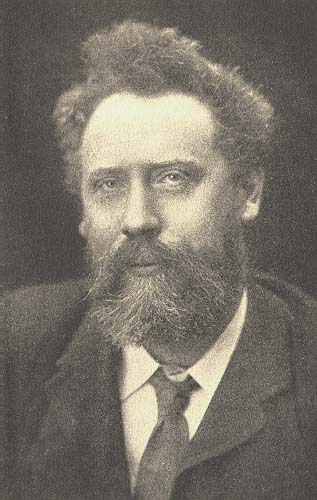
One poem that I learned, which I can still recite, is "Invictus," by William Ernest Henley.
I was very influenced by the power of the poem. I used to read it from time to time to motivate myself. I have realized, since, what Elder Orson F. Whitney, an Apostle of the Church of Jesus Christ of Latter-day Saints expressed in his poem "The Soul's Captain."
Following are the poem "Invictus" and Whitney's response.
William Ernest Henley (23 August 1849 – 11 July 1903)
Invictus
William Ernest Henley Out of the night that covers me,
Black as the pit from pole to pole,
I thank whatever gods may be
For my unconquerable soul.
In the fell clutch of circumstance
I have not winced nor cried aloud.
Under the bludgeonings of chance
My head is bloody, but unbowed.
Beyond this place of wrath and tears
Looms but the Horror of the shade,
And yet the menace of the years
Finds and shall find me unafraid.
It matters not how strait the gate,
How charged with punishments the scroll,
I am the master of my fate:
I am the captain of my soul.
The Soul's Captain
Orson F. Whitney
Art thou in truth?
Then what of Him who bought thee with His blood?
Who plunged into devouring seas
And snatched thee from the flood,
Orson Ferguson Whitney (1 July 1855 – 16 May 1931)
Who bore for all our fallen race
What none but Him could bear-
That God who died that man might live
And endless glory share.
Of what avail thy vaunted strength
Apart from His vast might?
Pray that His light may pierce the gloom
That thou mayest see aright.
Men are as bubbles on the wave,
As leaves upon the tree,
Thou, captain of thy soul! Forsooth,
Who gave that place to thee?
Free will is thine-free agency,
To wield for right or wrong;
But thou must answer unto Him
To whom all souls belong.
Bend to the dust that ‘head unbowed, ‘
Small part of life’s great whole,
And see in Him and Him alone,
The captain of thy soul.
P.S. Someone tell me if my Latin is correct in the title!
Look to your right. This is a pansy. It gets it's name from the French word pensée, meaning "thought." It has been used by some as a symbol for free-thought and the throwing-off of what some call the "tyranny or religion" and tradition. The axiom of this line of thought is, "It is wrong always, everywhere, and for anyone, to believe anything upon insufficient evidence,"1 and its titles are many.
Faith has been slighted by the pansy. Faith is sadly misunderstood. Therefore, faith has been left out in the cold. Atheists say, "I don't believe that God exists." Agnostic say, "I don't know whether or not God exists." Ignostics say, "I don't know what you mean when you say, 'God exists.'" Or, if invited in, has not been treated as the honored guest it should be. Every day I meet people who should probably talk with Jean Racine, the French playwright who asked, "Is a faith without action a sincere faith?" The result has been a decline of moral thought, accountability, culture, and behavior. That's the simple truth. Where faith does not exist, relativism rules. Where relativism dictates morals, obedience is fallacious. Where obedience is unnecessary, happiness is impossible.
I will now insert my obligatory C.S. Lewis quote. "It is just no good asking God to make us happy in our own way without bothering about religion. God cannot give us a happiness and peace apart from Himself, because it is not there. There's no such thing."
There is a relationship between Faith, Obedience, and Happiness that goes unnoticed. Faith causes, or rather motivates us to obey God's commandments, because true faith does not exist without action. It allows us to arrive at the truth that the Joseph Smith, the prophet of God taught in this way.
"In obedience there is joy and peace unspotted, unalloyed; and as God has designed our happiness...He will never institute an ordinance or give a commandment to His people that is not calculated in its nature to promote that happiness which He has designed, and which will not end in the greatest amount of good and glory to those who become the recipients of His law and ordinances."
Faith and obedience are symbiotic. One cannot survive without the other. I believe that happiness comes as we arrive at and understand absolute truth. How do we arrive at truth? I subscribe to what philosophers call Fideism, in part. By that I mean that both reason and faith are legitimate means of learning.
Blaise Pascal, a philosopher and mathematician of the 17th century, understood what I have come to understand. He stated that, "faith certainly tells us what senses do not, but not the contrary of what they see; it is above, not against them."
Saint Augustine, a millennium earlier, taught similarly: "Understanding is the reward of faith. Therefore seek not to understand that thou mayest believe, but believe that thou mayest understand."
Galileo said "I do not feel obliged to believe that the same God who has endowed us with sense, reason and intellect has intended us to forego their use." Faith is the proper exercise of our native powers of intellect. As we respond obediently and in faith to the way of life marked by an omniscient Being, we will gain knowledge, understanding, peace of mind, and happiness. We show (and develop) our faith as Joseph Smith did when he stated, "I made this my rule, when the Lord commands, do it."
Faith is above reason because the part is not greater than the whole. Faith requires work. Faith is humble and obedient. If we have and exercise faith, we will and must humbly recognize that our own talents and abilities--our logic and reason, and our senses and conclusions--truly are as potent as pansies.
What makes a man great? What makes his words great? For what reason are Emerson or Churchill or Cicero or Horace quoted more than the next guy?
"On one of his trips to Russia as Secretary of Agriculture, President Benson had a moving experience revealing the deep religious faith of some of the Russian people. "He had been conferring with Premier Khrushchev and other high officials of the Russian government as a representative of the United States. Following that conference, he indicated a desire to visit some church where Christians were still permitted to meet. After some persistence, he was taken to a Baptist church in Moscow. The members of the press accompanying him to Russia for his governmental meeting also followed him to this little church. "It was one of the very few Christian churches still open in that vast city. The congregation was made up mainly of elderly people, many of whom were women. "As the obviously American group walked into the chapel, the people in the congregation looked almost agape, hardly believing their eyes. One of the Americans, Secretary Benson, was unexpectedly called to the pulpit. "Choking with emotion, he testified in that city to the reality of the Lord Jesus Christ. "'God Lives. I know that He lives. I know that Jesus is the Christ and the Redeemer of the world,' he declared. "His words were translated into Russian. With each sentence, nods of assent were seen throughout the congregation. Women removed their head coverings and wiped their eyes. Men rubbed away the moisture that blurred their vision. The hardened news correspondents who came because they felt they were compelled to as a party of the Secretary's entourage, and who at first had no interest in this religious gathering whatever, now wept with the congregation. "It was a solemn moment. Hearts were melted. A spirit enveloped the worshipers such as they had never felt before. Hands folded and heads bowed in humble prayer.
"'I firmly believe in prayer,' the voice of the Secretary continued. 'It is possible to reach out and tap the unseen power which gives strength and anchor in time of need. Be not afraid. Keep God's commandments. Love the Lord. Love one another. Love all mankind. Truth will triumph. Time is on the side of truth.' "The American press then slowly walked down the aisle toward the door with a humble attitude in complete contrast to that with which they had entered. As they passed the pews, anxious hands and hungry hearts reached out to them. Then from thankful lips came the strains of 'God be with you til we meet again...,' although everyone realized that this hope would likely never be fulfilled in mortality."
 "It is said an Eastern Monarch once charged his wise men to invent a sentance, to be ever in view, and which should be true and appropriate in all times and situations. They presented him with the words, "And this, too, shall pass away." How much it expresses! How chastening in the hour of pride! How consoling in the depth of affliction!"
 In others' words: