- By Elder Thatcher

A Thematic Blog - -By Elder Thatcher
"By necessity, by proclivity, and by delight, we all quote."
-Ralph Waldo Emerson
Showing posts with label Orson F. Whitney. Show all posts

Saturday, December 4, 2010

Invictus Cum Auxilio

In Mrs. Crandall's seventh and eighth grade English classes, we memorized a poem a month.  At the end of the month, or whenever we were ready, Mrs. Crandall would set up a tripod, we would bring in a video cassette, and she would film us individually reciting the poem in front of our peers.  We didn't necessarily like it at the time, but it's made an incredible difference in my life.  I improved my much-needed skills of memorization and was introduced to and influenced by some of the world's great and influential literature. 

One poem that I learned, which I can still recite, is "Invictus," by William Ernest Henley.

I was very influenced by the power of the poem.  I used to read it from time to time to motivate myself.  I have realized, since, what Elder Orson F. Whitney, an Apostle of the Church of Jesus Christ of Latter-day Saints expressed in his poem "The Soul's Captain." 

Following are the poem "Invictus" and Whitney's response.
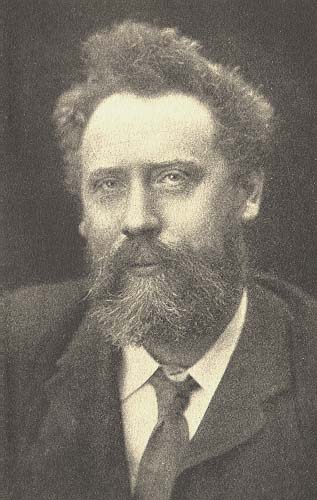
William Ernest Henley (23 August 1849 – 11 July 1903)

Invictus
William Ernest Henley
Out of the night that covers me,
Black as the pit from pole to pole,
I thank whatever gods may be
For my unconquerable soul.


In the fell clutch of circumstance
I have not winced nor cried aloud.
Under the bludgeonings of chance
My head is bloody, but unbowed.


Beyond this place of wrath and tears
Looms but the Horror of the shade,
And yet the menace of the years
Finds and shall find me unafraid.


It matters not how strait the gate,
How charged with punishments the scroll,
I am the master of my fate:
I am the captain of my soul.


 The Soul's Captain
Orson F. Whitney

Art thou in truth?
Then what of Him who bought thee with His blood?
Who plunged into devouring seas
And snatched thee from the flood,

Orson Ferguson Whitney  (1 July 1855 – 16 May 1931)

Who bore for all our fallen race
What none but Him could bear-
That God who died that man might live
And endless glory share. 


Of what avail thy vaunted strength
Apart from His vast might?
Pray that His light may pierce the gloom
That thou mayest see aright. 


Men are as bubbles on the wave,
As leaves upon the tree,
Thou, captain of thy soul! Forsooth,
Who gave that place to thee?


Free will is thine-free agency,
To wield for right or wrong;
But thou must answer unto Him
To whom all souls belong. 


Bend to the dust that ‘head unbowed, ‘
Small part of life’s great whole,
And see in Him and Him alone,
The captain of thy soul.


P.S. Someone tell me if my Latin is correct in the title!


Wednesday, October 20, 2010

The Problem of Pain

Have you ever wondered why life is so hard?  It's true--it is; but it's hard to swallow when you don't understand why.  So many people become pessimistic about pain and suffering because it is so ever-present in our lives.
On the other hand, some of the greatest men and women in history arrived where they did because they had come through their difficulties with this attitude, expressed by Orson F. Whitney.

“The spirit of the gospel is optimistic; it trusts in God and looks on the bright side of things. The opposite or pessimistic spirit drags men down and away from God, looks on the dark side, murmurs, complains, and is slow to yield obedience. We should honor the Savior’s declaration to be of good cheer."

Orson F. Whitney was born July 1, 1855.  He was, like myself, a missionary in Pennsylvania for the Church of Jesus Christ of Latter-day Saints.  He went on to become a prominent poet and writer, a professor of English and Theology, a senator and, eventually, an Apostle of the Lord Jesus Christ.  

He taught much, during his life, about what C.S. Lewis called "The Problem of Pain," viz. the question of "Why does God allow so much pain and suffering in the world?"

In an article he titled "A Lesson from the Book of Job," he wrote the following:

“To whom do we look, in days of grief and disaster, for help and consolation? … They are men and women who have suffered, and out of their experience in suffering they bring forth the riches of their sympathy and condolences as a blessing to those now in need. Could they do this had they not suffered themselves?
“… Is not this God’s purpose in causing his children to suffer? He wants them to become more like himself. God has suffered far more than man ever did or ever will, and is therefore the great source of sympathy and consolation.”

Two major things characterize the life of Jesus Christ.  One is tribulation. (see Isaiah 53, Mosiah 14)  The other is the invitation, "Come, follow me."  He wants us to live the way He did.  He lived sinlessly, but not effortlessly.  He lived in perfect obedience, but not in perfect comfort.  He lived in hope, but not at rest.

How can we expect to follow Jesus Christ without being subject to sorrow, grief, pain, anguish, and, in short, opposition?  We cannot.  It is part of the great plan of our Father in Heaven. 

 Again, to draw on others' words:


"No pain that we suffer, no trial that we experience is wasted.  It ministers to our education, to the development of such qualities as patience, faith, fortitude, and humility.  All that we suffer and all that we endure, especially when we endure it patiently builds up our characters, purifies our hearts, expands our souls, and makes us more tender and charitable, more worthy to be called the children of God...and it is through sorrow and suffering, toil and tribulation, that we gain the education that we come here to acquire and which will make us more like our Father...in heaven."  
-Orson F. Whitney                
       
I know that sorrow is a big part of every life that reads this article.  I promise you that I know that it is meant to be so.  We learn and grow because of it.  We follow the example of the only Perfect human being.