- By Elder Thatcher

A Thematic Blog - -By Elder Thatcher
"By necessity, by proclivity, and by delight, we all quote."
-Ralph Waldo Emerson

Tuesday, January 11, 2011

Strait and Narrow

I draw on others' words a lot.  The most useful are those that belong to Jesus Christ or his representatvies.  I've been having a lot of thoughts this week about a certain text from Christ's "Sermon on the Mount."  In Matthew 7:13-14, the Man of Galilee said,
"Enter ye in at the astrait gate: for wide is the gate, and broad is the way, that leadeth to destruction, and many there be which go in thereat:
Because strait is the gate, and narrow is the way, which leadeth unto life, and few there be that find it."


A while back a friend of mine taught me to solve the Rubik's cube.  I'll be honest; I never ever would have figured it out by myself.  There are certain patterns that must be followed exactly if you are to solve it.  There's no way of getting around it; you have to move it in the right ways even when it appears not to make sense.   But as long as you follow the patterns, it is the same every time and it goes from chaos to order. 


In the same way, God gives us a "way" to obtain happiness.  Humanity has spent ages searching for this "way."  Jesus Christ declared, quite boldly that the way was strait or strict, and that it was narrow, and that he himself was the way, meaning that he is the example of someone who perfectly follows the "way" and that through him it is possible to follow the "way." 

Heber C. Kimball taught,

"You cannot be happy unless you submit to the law of God, and to the principles of His government. 
"When a person is miserable, wretched, and unhappy in himself, put him in what circumstances you please, and he is wretched still.  If a person is poor, and composes his mind, and calmly submits to the providences of God, he will feel cheerful and hpapy in all circumstances, if he continues to keep the commandments of God." 

Similarly, Marion G. Romney stated,

"These commandments are not arbitrary edicts of a vindictive tyrant.  They but set forth the laws and ordinances which produce--as a matter of cause and effect--peace, success, and happiness."  I like this idea.  I love these others' words.  If we are to treat life as a Rubik's cube that we want to be orderly, we simply have to follow the pattern. 

"We are not living in a world where all roads are radii of a circle and where all, if followed long enough, will therefore draw gradually nearer and finally meet at the centre:  rather in a world where every road, after a few miles, forks into two, and each of those into two again, and at each fork you must make a decision....Life is not like a river but like a tree....Good, as it ripens, becomes continually more different not only from evil but from other good." 

                -C.S. Lewis                                            


Wednesday, January 5, 2011

Holy Ground- Misunderstood Miracles.

The time has come for me to share one of my all-time favorite quotes. 

This comes from an extended poem by Elizabeth Barret Browning entitled "Aurora Leigh."  Browning is known as one of the most successful female poets in history and a biographer lauded her as "the most philisophical poet" and called her life "a Gospel of applied Christianity." 
Let me show you why these accolades are well-due. 

"And truly, I reiterate, . . nothing's small!

No lily-muffled hum of a summer-bee,
But finds some coupling with the spinning stars;
No pebble at your foot, but proves a sphere;
No chaffinch, but implies the cherubim:
And,–glancing on my own thin, veined wrist,–
In such a little tremour of the blood
The whole strong clamour of a vehement soul
Doth utter itself distinct. Earth's crammed with heaven,
And every common bush afire with God:
But only he who sees, takes off his shoes,
The rest sit round it, and pluck blackberries,
And daub their natural faces unaware
More and more, from the first similitude."


Let me explicate what this means by quoting others' words.


"I am impressed as Moses brought Israel into the Sinai, which is a desolate piece of land.  They ran out of water and began to complain, "Were that we were in Egypt where we had all the water we could drink."  And God showed unto Moses water and Moses led the children of Israel to the water.  And there before them was all the water they could drink.  And when they drank of the water it was bitter.  They couldn't drink it.  It sat there and mocked them. It sat there and mocked their thirst.  and they cried out, "O Moses why did you lead us here?  And Moses cut down the tree and placed it into the water, as God instructed, and the water was made sweet.
"I am intrigued it was a tree.  Now if you had ever been to Sinai, you would be intrigued it was a tree as well.  In fact, I often tell my students the miracle was not that Moses saw a burning bush but that there was a bush there at all.  This is a really dry, parched area of land.  A tree.  How did a tree get there?  When did the tree get there?  It is possible, that if you and I had seen God's miracle we would have never even recognized it.  Years and years before it was needed a seed blew accross dry land.  Years and years before it was needed it fell into a crevice where there was moisture where it could take root.  If you and I would have seen that we would have said, "This is not God, this is not a miracle, it is just nature."  And as the tree became a sapling and sprouted its beautiful elaves we would have said, "This is not God, this is not a miracle, it is just nature." And as it grew to become a tree we would have said, "This is not God, this is not a miracle, it is just nature."  But isn't it interesting that when Moses arrived the right tree was there that it made bitterness become sweet.  Brothers and Sisters, do not discount God.  It may appeart that nature is taking its course.  It may appear that history is simply moving along its way.  But I assure you that God has already planted and when you and I need them those trees will be ready, and it will make the bitterness become sweet unto us." 
-Dr. Richard D. Draper                


Tuesday, December 28, 2010

A Man of Honor

I've been reflecting, lately, on the concept of Honor.  There are generally two senses in which we use the word.  One being the quality of honesty or integrity, the second being related to esteem or high respect.  I've been thinking about the relationship between these two.  I think the truest way to receive the second is to devolop the first. 

We honor God, in part, because of His supreme integrity.  He receives honor because He has perfect honor.  I can place total confidence in God because I know that what He says, He will do.  He'll follow through.  God is a man of honor

I've been discovering that the key to real power is honor--in the sense of integrity.  The Buddha once said, "If a man lives a pure life, nothing can destroy him."  I think there is a lot of truth to that. 
Consider these words from Karl G. Maeser, founder and first president of Brigham Young University. 

"My friends, I have been asked what is meant by 'word of honor.' I will tell you.  Place me behind prison walls--high, thick walls of stone.  It is possible that somehow I could escape.  But stand me on the floor, draw a chalk line around me and have me give my word of honor not to cross it and I would never cross the line.  I'd die first!" 
Karl G. Maeser was a man of honor. 

I believe this to be something that God requires of us.  Abraham Lincoln, always famous for his honesty and integrity affirmed, "I am not bound to win, but I am bound to be true.  I am not bound to succeed, but I am bound to live up to what light I have."  He felt accountable to God for his actions and for what he did with what he was given.  He was a man of honor. 

This, to me, is one of the most valuable qualities of human being can possess.  It is something I would like to develop.  There are not many people who attain such a character.  My father is one.  I would trust his word on pain of death.  I know that he is a man of honor. 


In others' words:
"To be trusted is a greater compliment than to be loved." 
-David O. McKay

Saturday, December 4, 2010

Invictus Cum Auxilio

In Mrs. Crandall's seventh and eighth grade English classes, we memorized a poem a month.  At the end of the month, or whenever we were ready, Mrs. Crandall would set up a tripod, we would bring in a video cassette, and she would film us individually reciting the poem in front of our peers.  We didn't necessarily like it at the time, but it's made an incredible difference in my life.  I improved my much-needed skills of memorization and was introduced to and influenced by some of the world's great and influential literature. 

One poem that I learned, which I can still recite, is "Invictus," by William Ernest Henley.

I was very influenced by the power of the poem.  I used to read it from time to time to motivate myself.  I have realized, since, what Elder Orson F. Whitney, an Apostle of the Church of Jesus Christ of Latter-day Saints expressed in his poem "The Soul's Captain." 

Following are the poem "Invictus" and Whitney's response.

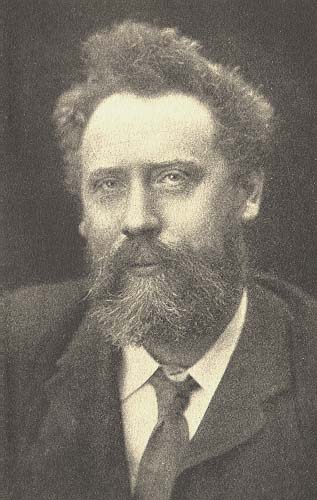
William Ernest Henley (23 August 1849 – 11 July 1903)

Invictus
William Ernest Henley
Out of the night that covers me,
Black as the pit from pole to pole,
I thank whatever gods may be
For my unconquerable soul.


In the fell clutch of circumstance
I have not winced nor cried aloud.
Under the bludgeonings of chance
My head is bloody, but unbowed.


Beyond this place of wrath and tears
Looms but the Horror of the shade,
And yet the menace of the years
Finds and shall find me unafraid.


It matters not how strait the gate,
How charged with punishments the scroll,
I am the master of my fate:
I am the captain of my soul.


 The Soul's Captain
Orson F. Whitney

Art thou in truth?
Then what of Him who bought thee with His blood?
Who plunged into devouring seas
And snatched thee from the flood,

Orson Ferguson Whitney  (1 July 1855 – 16 May 1931)

Who bore for all our fallen race
What none but Him could bear-
That God who died that man might live
And endless glory share. 


Of what avail thy vaunted strength
Apart from His vast might?
Pray that His light may pierce the gloom
That thou mayest see aright. 


Men are as bubbles on the wave,
As leaves upon the tree,
Thou, captain of thy soul! Forsooth,
Who gave that place to thee?


Free will is thine-free agency,
To wield for right or wrong;
But thou must answer unto Him
To whom all souls belong. 


Bend to the dust that ‘head unbowed, ‘
Small part of life’s great whole,
And see in Him and Him alone,
The captain of thy soul.


P.S. Someone tell me if my Latin is correct in the title!


Tuesday, November 23, 2010

"After All We Can Do"

 Michaelangelo Buonaroti, hailed as one of the most masterful artists in history, enjoyed much fame during his life.  He was given the distinction of being the first artist to have his biography published during his lifetime.  He was referred to, in Florence and around Italy, as Il Divino, or "The Divine One."  Once he entered the forefront of the Renaissance art society, his fame spread, and throughout his life he received commission upon commission by the most respected patrons in Italy. 

 Although reported to be somewhat arrogant regarding his talents, his own words provide a deep insight.


"If people knew how hard I worked to gain my mastery, it would not be so wonderful."  

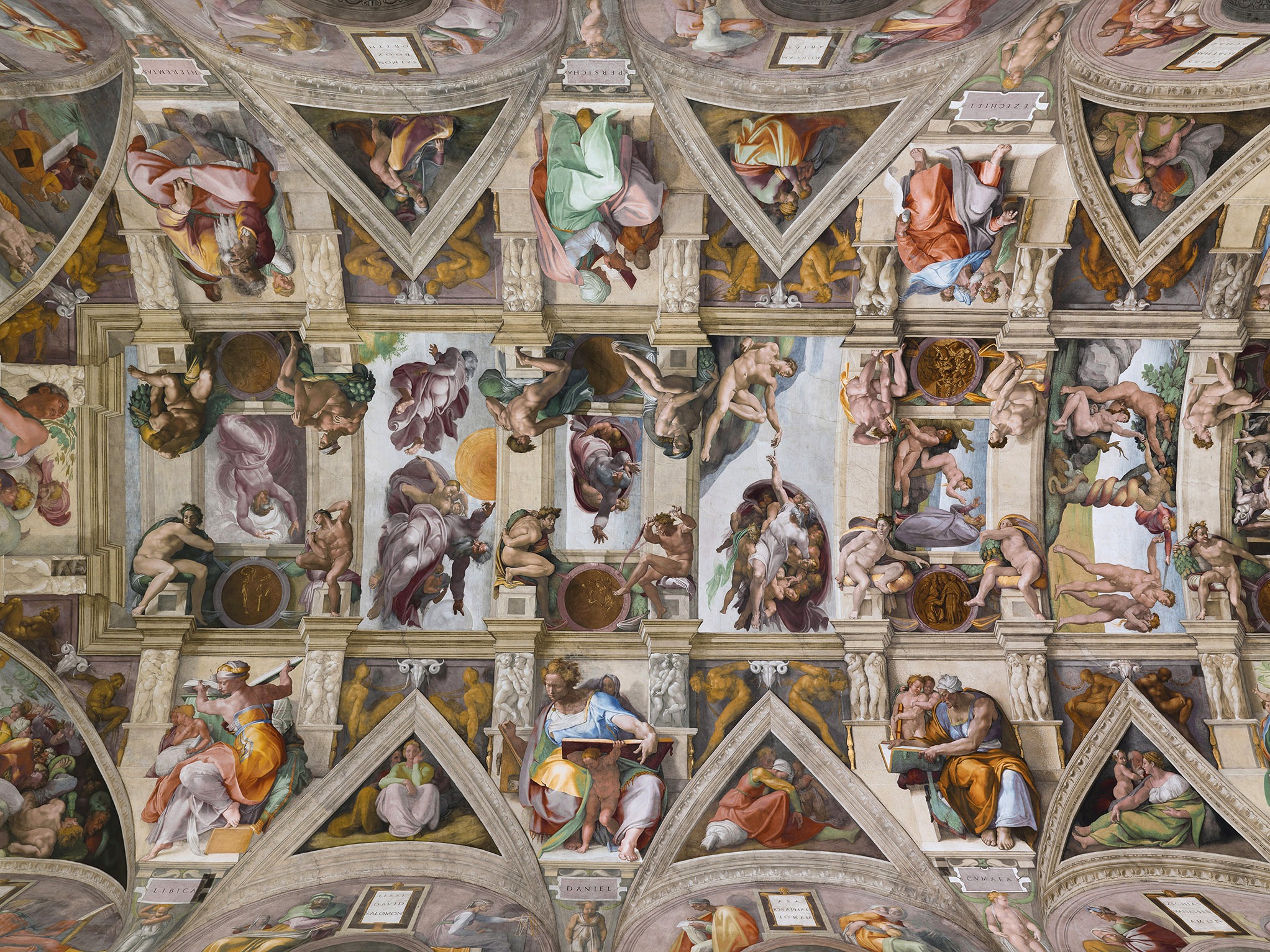
Ceiling of the Sistine Chapel, painted by Michaelangelo

Hesiod  (c. 700 BC)

The early Greek poet and author, Hesiod, a contemporary of Homer, believed as well in diligence.

"Mediocrity is easy, it can be had in quantity.  The road is smooth, safe, and it lies close by.  But, in front of excellence the immortal gods have put sweat and hard work and long and steep is the road to it, and rough at first.  But, when you make it to the top then it is easy, even though it is hard."  

 Several months ago, I went to a meeting where I was privileged to hear a man named Elder Kevin W. Pearson speak to a group of missionaries.  He is a member of the First Quorum of the Seventy, of the Church of Jesus Christ of Latter-day Saints. He is a special witness of Jesus Christ.  He said something that struck me and which I want to apply.


"Hard work reveals capacity....The harder I work, the more my innate capacity is revealed to me." 


Another special witness of the Savior, David O. McKay, who passed away in 1970, had a similar energy by which he did great things and inspired others to rise higher. 

"You are the one who has to decide whether you'll do it or toss it aside; whether you'll strive for the goal that's afar, or just be content to stay where you are."

 This life is a time to work and to work hard.  God will not justify anyone who refuses to measure up to his own potential.  We mortals are weak but we can give what we have, and when we do so, God can do great things through us. 
God doesn't want us to be average.  He wants us to be heirs of Eternal Life.  He wants us to be outstanding.  To obtain that type of excellence requires, as Michaelangelo said, hard, concerted, focused, and prolonged labor.

Our potential of our Divine spark is limitless when we strike the flint of our own diligent effort to the steel of God's grace.  It will light a fuse that can only be cut by our own doubt. 

In others' words,


"Doubt not, but be believing, and begin as in times of old, and come unto the Lord with all your heart, and work out your salvation with fear and trembling before him."    

-Mormon 9:27

Book of Mormon Online - Mormon Chapter 9                                                                  

Friday, November 19, 2010

Keys to Happiness

Socrates taught, "Know Thyself."  
 (469-399 BC)


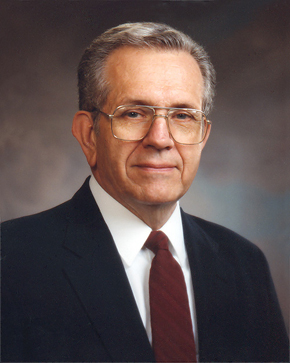
"You are a child of God.  He is the Father of your Spirit.  Spiritually you are of noble birth, the offspring of the King of Heaven.   Fix that truth in your mind and hold to it.  However many generations in your mortal ancestry, no matter what race or people you represent, the pedigree of your spirit can be written on a single line.  You are a child of God!" 
                                            -Boyd K. Packer
                                             (1924-Present)
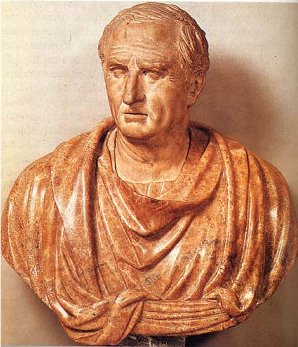
Cicero taught, "Control Thyself."
 (106-43 BC)

 
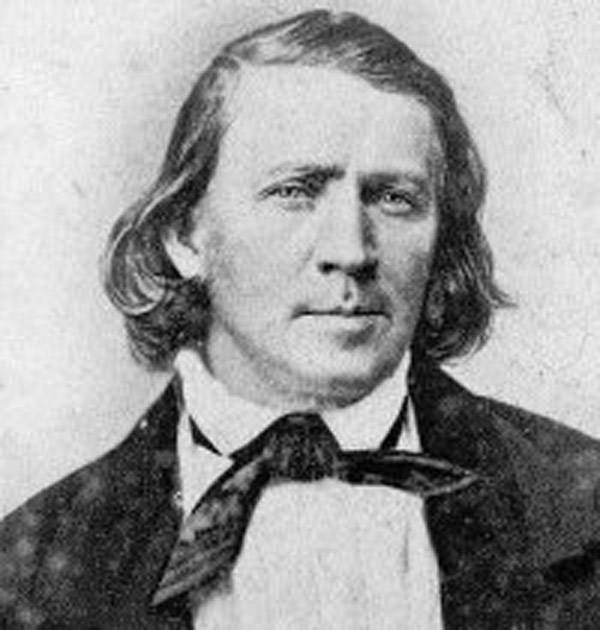
"Learn to control yourselves; learn to be in the hands of God as clay in the hands of the potter."  

"I have frequently said that the greatest endowment God ever gave to man is good, sound, solid sense to know how to govern ourselves."  

"If you first gain power to check your words, you will then begin to have power to check your judgment, and at length actually gain power to check your thoughts and reflections."  

                                                                            -Brigham Young
                                                                             (1801-1877)
Christ taught, "Give Thyself."
(c. 5BC-1AD -- 30-33 AD)

"To find real happiness, we must seek for it in a focus outside ourselves.  No one has learned the meaning of living until he has surrendered his ego to the service of his fellow man.  Service to others is akin to duty--the fulfillment of which brings true joy."  
                                                   -Thomas S. Monson
                                                     (1927-Present)

Wednesday, November 10, 2010

Absolutely Essential

I apologize for the last post. I'm simplifying.  I will return to the real purpose of this blog and minimize my own commentary (soap-boxing) on the quotes I provide.  I can't really say it any better anyway. 

I am reprimanded by the words of a favorite author of mine, Antoine de Saint-Exupéry.  In his book The Little Prince, the title character so truly teaches (as I have now illustrated):

"Grown-ups never understand anything for themselves, and it is tiresome for children to be always and forever explaining things to them."

Saint-Exupéry was a French pilot during WWII.  In spite of his involvement on behalf of his country, he despised war and viewed life with the eye of a poet.  He wrote much concerning charity, which the prophet Mormon defines as "the pure love of Christ."

The insights of Saint-Exupéry are simple but profound.  For fear of saying anything to detract from  their greatness, I will refrain from comment, but merely place quotes in a pleasant order.


"Charity never humiliated him who profited from it, nor ever bound him by the chains of gratitude, since it was not to him but to God that the gift was made."
-Antoine de Saint-Exupéry             

"If a man say, 'I love God,' and hateth his brother, he is a liar:  for he that loveth not his brother whom he hath seen, how can he love God whom he hath not seen?  And this commandment have we from him, That he who loveth God love his brother also."
1 John 4:20-21

"For true love is inexhaustible; the more you give, the more you have. And if you go to draw at the true fountainhead, the more water you draw, the more abundant is its flow."
Antoine de Saint-Exupéry

"Love does not cause suffering; what causes it is the sense of ownership, which is love's opposite."  
Antoine de Saint-Exupéry


Let go. Let God.  Without charity, life is meaningless.  With it, life is given energy and purpose.  In it's pure unadulterated form, Love is the greatest thing in the world and the greatest absolute essential.
 As a summation of his philosophy, we can take these words of Antoine de Saint-Exupéry to heart.

"And now here is my secret, a very simple secret; it is only with the heart that one can see rightly, what is essential is invisible to the eye."