- By Elder Thatcher

A Thematic Blog - -By Elder Thatcher
"By necessity, by proclivity, and by delight, we all quote."
-Ralph Waldo Emerson

Wednesday, March 23, 2011

Life: God's University

"Busy-work."  Remember that?  The curse of every student from Elementary school on up.  Wouldn't it have been nice if every second of our education could have been tailor-made instead of having to waste time on a seemingly endless supply of worksheets?

Of course, the reason for what we term "busy-work" is that education as it exists today can't be made as individual as we would like.  Each student has different things to learn at different speeds and the goal of an educator is to affect the most learning possible for all the students. 

However, it is not a perfect machine. 

Life, on the other hand, can be the most efficient classroom because God is the master teacher.  Our lives are tailor-made in the same way to the extent that we are hard-working and obedient.  It's interesting to take a look at the types of work he assigns.   
Wilford Woodruff, the fourth President of the Church of Jesus Christ of Latter-day Saints taught that God educates us through difficulties--by giving us things that will make us struggle--by "chastising" us. 

"The chastisements we have had from time to time have been for our good, and are essential to learn wisdom, and carry us through a school of experience we never could have passed through without." 

Diana Nyad, a word-champion long-distance swimmer (who, I am informed, is currently training to swim from Cuba to Florida.  And yes, she is a US citizen.) made this comment.

"The most extreme conditions require the most extreme response, and for some individuals, the call to that response is vitality itself....The integrity and self-esteem gained from winning the battle against extremity are the richest treasures in my life." 
 
And finally, the quintessential Ralph Waldo Emerson gave us this insight. 

"A man who sits on a cushion of advantages, goes to sleep.  When he is pushed, tormented, defeated, he has been put on his wits,...[he learns] moderation and real skill."

In life, we suffer; we experience hardship and pain and sorrow.  Why?  Because it gives us experience that we could not gain any other way.  I repeat:  we could not gain it any other way.  We could not learn to trust, we would not learn humility, we would not learn appreciation for the peaceful and happy times.  We would not learn and we would not grow.  (See 2 Nephi 2:11,23; 2 Cor. 12:9-10). 

How different would life look if we took our foreheads off the desk, picked up the pencil and saw the Teacher who is daily giving us assignments and tasks, and "doeth not anything save it be for the benefit of the world; for he loveth the world, even that he layeth down his own life that he may draw call men unto him. Wherefore, he commandeth none that they shall not partake of his salvation." (2 Nephi 26:24)
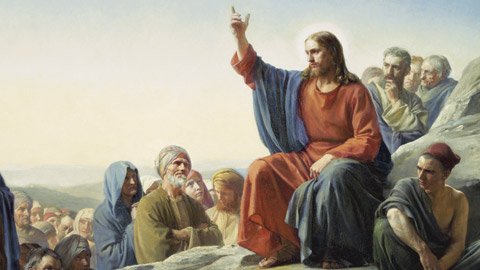
Every second of this life has the capability of being an educational experience.  It all depends on us.

In others' words:

"No pain, no palm; no thorns, no throne; no gall, no glory; no cross, no crown." 
-William Penn

Friday, February 25, 2011

Tenaciously Happy - It's not Panache

Let me share some of the best advice I have ever received.

I never met the French scientist Louis Pasteur, but when I began my adventure as a missionary, the following words by him were repeated to me until I could never forget them. "Let me tell you," he said, "the secret that has led me to my goal: my strength lies solely in my tenacity."
Tenacity: the quality of holding fast; of being characterized by keeping a firm grip; of being persistent.

This phrase embodies a lot of wisdom, but one thing that it taught me is that my duty trumps my desire. Sometimes, I would prefer not to do hard things; I don't have the desire; my circumstances don't make it easy. There are always a miriad of excuses, but duty is something that cannot be excused.


I believe it might be a duty to be happy; to search for knowledge and beauty and find peace.

True, it is a difficult duty at times--we are like water and seek for the path of least resistence--but we can rise above our circumstances; we can choose to shape our own destinies. We can choose to be tenacious, for therein lies our strength. If I am only good when it is easy to be good, if I only forgive those who forgive me, if I am only happy on days that are 75 degrees and sunny, am I truly good, forgiving or happy?


In others' words...
"If men had postponed the search for knowledge and beauty until they were secure, the search would never have begun....Life has never been normal....Humanity...wanted knowledge and beauty now, and would not wait for the suitable moment that never comes....The insects have taken a different line: they have sought first the material welfare and the security of the hive, and presumably they have their reward. Men are different. They propound mathematical theorems in beleaguered cities, conduct metaphysical arguments in condemned cells, make jokes on scaffolds, discuss the last new poem while advancing to the walls of Quebec, and comb their hair at Thermopylae. This is not panache; it is our nature."
- C. S. Lewis


Wednesday, February 2, 2011

Today is Better Than Yesterday - This Too Shall Pass

A great story was related on September 30, 1859 at an address given to theWisconsin State Agricultural Society in Milwaukee.  One may wonder what importance such an address could be.  The question is undoubtedly answered by the fact that the address was given by Abraham Lincoln. 
The story was not originated by Mr. Lincoln; it is the product of numerous Near Eastern folklore traditions.  Mr. Lincoln shared it in this way.


"It is said an Eastern Monarch once charged his wise men to invent a sentance, to be ever in view, and which should be true and appropriate in all times and situations.  They presented him with the words, "And this, too, shall pass away."  How much it expresses!  How chastening in the hour of pride!  How consoling in the depth of affliction!" 

This was brought to my mind just this morning because honestly, it was really hard to get bed this morning.  That just happens sometimes.  But it is wonderful to remember that it's temporary. 

In others' words:
"Embrace this day with an enthusiastic welcome, no matter how it looks...When you are physically sick, tired, or in despair, steer your thoughts away from yourself and direct them in gratitude and love, toward God.  In your life there have to be challenges.  They will either bring you closer to God and therefore make you stronger, or they can destroy you.  But you make the decision of which road to take.  Put all frustrations, hurt feelings, and grumblings into the perspective of your eternal hope.  Light will flow into your soul.  Be grateful for every opportunity to serve.  As you are learning this lesson right now, God wants to give you something better."    -F. Enzio Busche

It is important to remember that the things that are most important are things that last forever and are not evenescent.  However, I believe that in this life, which itself is temporary and will pass, the things that are momentary combine together to shape us in ways that are everlasting.  If we respond correctly to the positive and negative situations in our lives. 

"This is our one and only chance at mortal life...opportunities come and then leave....The most important lessons are those that teach us what is important and what is not."
-Thomas S. Monson


I'm going to include this movie not because of the New Year.  That's a little bit of old news.  Mostly because it's what I've been trying to say in others' words.  I ask that you watch it and apply the quotes I provided above.  Remember Lot's Wife.  Today is better than yesterday, and tomorrow will be better yet.

Friday, January 28, 2011

Subtle Realities - Fruits of the Spirit

Recently, I visited a good friend in the hospital.  She is elderly and having numerous health problems.  As my companion and I came into the room, she was awake and sitting up and we began to talk.  She is the type of person who, in her earlier life, was outspoken and powerful, but at the same time has very tender feelings and has suffered much.  She is kind-hearted and thoughtful and she trusts God. 

While laying on her hospital bed, she was connected to a miriad of wires and tubes and the like--electronic pads and interveinous whatnot.  A screen above her and to her right showed her blood pressure, temperature, heart-rate, and a number of other things that I don't understand.  All I know is that when graph shows a consistent pattern of troughs and peaks, things are good.  I also know that a good resting heart-rate is somewhere around 70 beats per minute.  Hers read in the mid 90's. 


We took two seats a few feet from the foot of her bed.  She was very willing to talk.  She seemed exhausted but capable--pained but driven. 
She had been there for about a week. 

After talking for a few minutes, I opened up my scriptures and shared with her several of my favorite passages from the Book of Mormon in an attempt to bring her comfort.  I assured her that I know that her Savior knows the pain that she was dealing with, that He knows her sickness and He knows her desires, diligence, and dedication.  She nodded quietly in gratitude. 

I had glanced at the heart monitor several times since sitting down.  Her pulse had normalized and was reading between 75-80 bpm.  She had been seated normally before we got there.  Her level of physical exertion hadn't really changed.  But I could physically see the peace that came over her.  I felt it, but it struck me that I was able to see it. 

Paul taught that "the fruit of the Spirit is love, joy, peace, longsuffering, gentleness, goodness, faith, meekness, temperance." (Gal. 5:22-23)

Or, in others' words,

"[The Holy Spirit] quickens all the intellectual faculties, increases, enlarges, expands and purifies all the natural passions and affections, and adapts them, by the gift of wisdom, to their lawful use.  It inspires, develops, cultivates and matures all the fine-toned sympathies, joys, tastes, kindred feelings and affections of our nature.  It inspires virtue, kindness, goodness, tenderness, gentleness, and charity.  It develops beauty of person, form and features.  It tends to health, vigor, animation and social feeling.  It develops and invigorates all the faculties of the physical and intellectual man.  It strengthens, invigorates, and gives tone to the nerves.  In short, it is, as it were, marrow to the bone, joy to the heart, light to the eyes, music to the ears, and life to the whole being." 
-Parly P. Pratt

Tuesday, January 11, 2011

Strait and Narrow

I draw on others' words a lot.  The most useful are those that belong to Jesus Christ or his representatvies.  I've been having a lot of thoughts this week about a certain text from Christ's "Sermon on the Mount."  In Matthew 7:13-14, the Man of Galilee said,
"Enter ye in at the astrait gate: for wide is the gate, and broad is the way, that leadeth to destruction, and many there be which go in thereat:
Because strait is the gate, and narrow is the way, which leadeth unto life, and few there be that find it."


A while back a friend of mine taught me to solve the Rubik's cube.  I'll be honest; I never ever would have figured it out by myself.  There are certain patterns that must be followed exactly if you are to solve it.  There's no way of getting around it; you have to move it in the right ways even when it appears not to make sense.   But as long as you follow the patterns, it is the same every time and it goes from chaos to order. 


In the same way, God gives us a "way" to obtain happiness.  Humanity has spent ages searching for this "way."  Jesus Christ declared, quite boldly that the way was strait or strict, and that it was narrow, and that he himself was the way, meaning that he is the example of someone who perfectly follows the "way" and that through him it is possible to follow the "way." 

Heber C. Kimball taught,

"You cannot be happy unless you submit to the law of God, and to the principles of His government. 
"When a person is miserable, wretched, and unhappy in himself, put him in what circumstances you please, and he is wretched still.  If a person is poor, and composes his mind, and calmly submits to the providences of God, he will feel cheerful and hpapy in all circumstances, if he continues to keep the commandments of God." 

Similarly, Marion G. Romney stated,

"These commandments are not arbitrary edicts of a vindictive tyrant.  They but set forth the laws and ordinances which produce--as a matter of cause and effect--peace, success, and happiness."  I like this idea.  I love these others' words.  If we are to treat life as a Rubik's cube that we want to be orderly, we simply have to follow the pattern. 

"We are not living in a world where all roads are radii of a circle and where all, if followed long enough, will therefore draw gradually nearer and finally meet at the centre:  rather in a world where every road, after a few miles, forks into two, and each of those into two again, and at each fork you must make a decision....Life is not like a river but like a tree....Good, as it ripens, becomes continually more different not only from evil but from other good." 

                -C.S. Lewis                                            


Wednesday, January 5, 2011

Holy Ground- Misunderstood Miracles.

The time has come for me to share one of my all-time favorite quotes. 

This comes from an extended poem by Elizabeth Barret Browning entitled "Aurora Leigh."  Browning is known as one of the most successful female poets in history and a biographer lauded her as "the most philisophical poet" and called her life "a Gospel of applied Christianity." 
Let me show you why these accolades are well-due. 

"And truly, I reiterate, . . nothing's small!

No lily-muffled hum of a summer-bee,
But finds some coupling with the spinning stars;
No pebble at your foot, but proves a sphere;
No chaffinch, but implies the cherubim:
And,–glancing on my own thin, veined wrist,–
In such a little tremour of the blood
The whole strong clamour of a vehement soul
Doth utter itself distinct. Earth's crammed with heaven,
And every common bush afire with God:
But only he who sees, takes off his shoes,
The rest sit round it, and pluck blackberries,
And daub their natural faces unaware
More and more, from the first similitude."


Let me explicate what this means by quoting others' words.


"I am impressed as Moses brought Israel into the Sinai, which is a desolate piece of land.  They ran out of water and began to complain, "Were that we were in Egypt where we had all the water we could drink."  And God showed unto Moses water and Moses led the children of Israel to the water.  And there before them was all the water they could drink.  And when they drank of the water it was bitter.  They couldn't drink it.  It sat there and mocked them. It sat there and mocked their thirst.  and they cried out, "O Moses why did you lead us here?  And Moses cut down the tree and placed it into the water, as God instructed, and the water was made sweet.
"I am intrigued it was a tree.  Now if you had ever been to Sinai, you would be intrigued it was a tree as well.  In fact, I often tell my students the miracle was not that Moses saw a burning bush but that there was a bush there at all.  This is a really dry, parched area of land.  A tree.  How did a tree get there?  When did the tree get there?  It is possible, that if you and I had seen God's miracle we would have never even recognized it.  Years and years before it was needed a seed blew accross dry land.  Years and years before it was needed it fell into a crevice where there was moisture where it could take root.  If you and I would have seen that we would have said, "This is not God, this is not a miracle, it is just nature."  And as the tree became a sapling and sprouted its beautiful elaves we would have said, "This is not God, this is not a miracle, it is just nature." And as it grew to become a tree we would have said, "This is not God, this is not a miracle, it is just nature."  But isn't it interesting that when Moses arrived the right tree was there that it made bitterness become sweet.  Brothers and Sisters, do not discount God.  It may appeart that nature is taking its course.  It may appear that history is simply moving along its way.  But I assure you that God has already planted and when you and I need them those trees will be ready, and it will make the bitterness become sweet unto us." 
-Dr. Richard D. Draper                


Tuesday, December 28, 2010

A Man of Honor

I've been reflecting, lately, on the concept of Honor.  There are generally two senses in which we use the word.  One being the quality of honesty or integrity, the second being related to esteem or high respect.  I've been thinking about the relationship between these two.  I think the truest way to receive the second is to devolop the first. 

We honor God, in part, because of His supreme integrity.  He receives honor because He has perfect honor.  I can place total confidence in God because I know that what He says, He will do.  He'll follow through.  God is a man of honor

I've been discovering that the key to real power is honor--in the sense of integrity.  The Buddha once said, "If a man lives a pure life, nothing can destroy him."  I think there is a lot of truth to that. 
Consider these words from Karl G. Maeser, founder and first president of Brigham Young University. 

"My friends, I have been asked what is meant by 'word of honor.' I will tell you.  Place me behind prison walls--high, thick walls of stone.  It is possible that somehow I could escape.  But stand me on the floor, draw a chalk line around me and have me give my word of honor not to cross it and I would never cross the line.  I'd die first!" 
Karl G. Maeser was a man of honor. 

I believe this to be something that God requires of us.  Abraham Lincoln, always famous for his honesty and integrity affirmed, "I am not bound to win, but I am bound to be true.  I am not bound to succeed, but I am bound to live up to what light I have."  He felt accountable to God for his actions and for what he did with what he was given.  He was a man of honor. 

This, to me, is one of the most valuable qualities of human being can possess.  It is something I would like to develop.  There are not many people who attain such a character.  My father is one.  I would trust his word on pain of death.  I know that he is a man of honor. 


In others' words:
"To be trusted is a greater compliment than to be loved." 
-David O. McKay